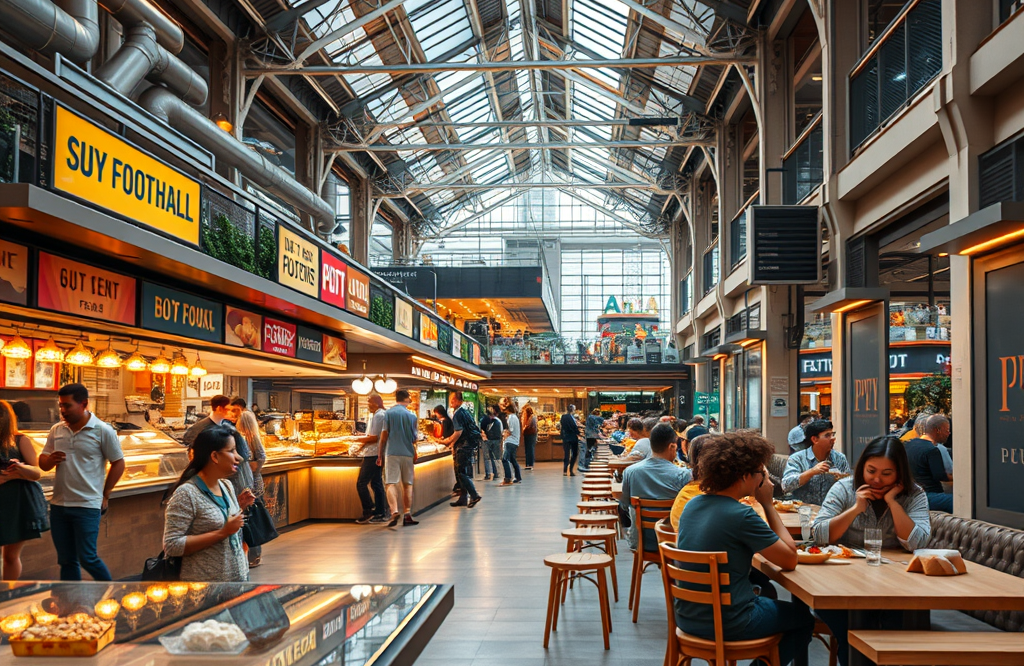
Food hall and market developments have emerged as a prominent mixed‑use real estate asset class, blending retail, hospitality, and experiential design into a single, highly curated environment. Unlike traditional shopping centers or standalone restaurants, food halls operate through a layered legal and operational framework that must balance landlord control with vendor flexibility. A carefully structured legal foundation is critical to ensuring long‑term viability, revenue stability, and risk mitigation for owners and investors while preserving the vibrancy that attracts patrons.
At the core of most food hall projects is a departure from conventional retail leasing. Specialized lease structures are designed to reflect shorter operating hours, shared infrastructure, and revenue models that differ from fixed‑rent retail spaces. Rather than relying solely on base rent, many food hall leases incorporate percentage rent tied to gross sales, minimum guarantees, or hybrid rent models. These structures align landlord and vendor interests while allowing flexibility for emerging concepts. Lease terms are often shorter than traditional retail leases, enabling operators to refresh concepts and maintain market relevance. Careful drafting is required to address early termination rights, expansion opportunities, exclusivity limitations, and remedies if a vendor fails to meet performance benchmarks.
Food hall leases also commonly include shared use provisions that differ substantially from standard commercial agreements. Vendors typically rely on common seating areas, restrooms, waste facilities, grease traps, and utility infrastructure maintained by the owner or master operator. Lease language must clearly allocate responsibility for maintenance, repair, and replacement of these shared systems. Cost recovery mechanisms, including common area maintenance charges, utility allocation formulas, and capital expenditure pass‑throughs, should be transparent and predictable. Ambiguity in these provisions can lead to disputes that undermine both vendor relationships and the financial model of the project.
Common area management is a defining feature of food hall developments and requires heightened legal coordination. Unlike traditional retail centers where common areas primarily serve as access points, food hall common spaces are integral to the customer experience. Seating layouts, cleaning protocols, security staffing, and event programming directly influence tenant sales. Management agreements must define the scope of operational authority, decision‑making rights, and performance standards. Owners frequently retain centralized control over branding, signage, hours of operation, and marketing initiatives to preserve a cohesive identity across vendors.
Effective common area management also extends to compliance with health, safety, and accessibility requirements. Food halls face overlapping regulatory oversight from local health departments, fire marshals, building inspectors, and accessibility authorities. The legal framework must assign responsibility for inspections, corrective actions, and compliance costs. In many developments, the owner or master tenant assumes responsibility for base building compliance while individual vendors remain accountable for food safety, employee practices, and equipment within their licensed spaces. Clear delineation of obligations reduces exposure to enforcement actions that could impact the entire facility.
Vendor qualification and curation represent another critical legal and strategic component. Food halls rely on a carefully selected mix of operators to create differentiation and drive foot traffic. From a legal standpoint, qualification standards should be objective, enforceable, and consistently applied. These may include minimum experience requirements, financial capacity thresholds, proof of licensing, insurance coverage, and demonstrated operational systems. Application processes often include background checks, concept reviews, and financial disclosures, all of which must be handled in compliance with applicable privacy and nondiscrimination laws.
Curation decisions are frequently supported by exclusivity and use restrictions embedded in lease agreements. Owners may limit menu overlap to preserve diversity and avoid internal competition. These restrictions must be drafted narrowly enough to remain enforceable while providing sufficient flexibility for vendors to evolve their offerings. Change‑of‑concept provisions are particularly important in food halls, where trends shift rapidly. Lease terms should require owner approval for material menu or branding changes while avoiding overly restrictive standards that could stifle innovation.
Operational and liability considerations are amplified in food hall environments due to the density of vendors and shared patron spaces. Risk allocation is a central legal concern. Indemnification clauses, insurance requirements, and limitation of liability provisions must be tailored to reflect the shared nature of operations. Vendors typically carry general liability, product liability, workers’ compensation, and liquor liability insurance where applicable, naming the owner and manager as additional insureds. Owners, in turn, maintain coverage for the building, common areas, and overarching operational risks.
Food safety and contamination risks present unique exposure in multi‑vendor settings. Lease provisions should address cross‑contamination, pest control, waste disposal, and grease management, as failures in one stall can affect neighboring operators and the entire facility. Incident response protocols, including reporting requirements and temporary shutdown authority, should be contractually defined. Owners often reserve the right to suspend a vendor’s operations if health violations pose a broader risk, with clear standards governing reinstatement and cost recovery.
Employment and labor considerations also intersect with the legal framework of food halls. While vendors generally employ their own staff, owners may impose minimum training standards, dress codes, or customer service expectations to maintain brand consistency. These requirements must be structured carefully to avoid unintended joint‑employer exposure under labor laws. Management agreements and vendor handbooks should emphasize operational independence while setting clear performance expectations tied to the customer experience.
From a financing and investment perspective, lenders and equity partners closely scrutinize the legal structure of food hall developments. Revenue predictability, enforceable leases, and centralized operational control can significantly influence underwriting. Legal documentation must support assignment rights, lender access, and remedies in the event of default. Experienced counsel, such as a James Neeld commercial attorney, often plays a critical role in structuring these arrangements to balance flexibility with bankability, particularly in complex urban or adaptive reuse projects.
In markets like Kansas City, where food halls frequently intersect with redevelopment initiatives and public incentives, the legal framework may also integrate financing tools and incentive compliance. Transactional counsel with local insight, including James Neeld Kansas City experience, can help align lease structures and operational models with incentive requirements without compromising day‑to‑day functionality.
Ultimately, successful food hall and market developments depend on a legal framework that supports curated creativity while maintaining operational discipline. Thoughtfully designed leases, robust common area management systems, disciplined vendor selection processes, and comprehensive risk allocation strategies form the foundation for sustainable performance. As the food hall sector continues to evolve, developers and owners who invest in precise, adaptable legal structures will be best positioned to protect value and foster long‑term success.
 Venture