Basic Documents Related to Financing Commercial Property Acquisitions
I prepared a lecture for the National Business Institute titled Basic Documents Related to Financing Commercial Property Acquisitions. The link to my full article is below and a few highlights are in this post.
What are we discussing?
We are discussing loan documents related to the acquisition of commercial real estate. We are not discussing residential acquisitions and I am not qualified to handle questions regarding residential real estate matters. Oddly enough, I find commercial transactions easier than consumer transactions.
The type of property typically dictates the type of financing available or desired for the acquisition. For example, a single-tenant warehouse can be financed with many different options of financing including credit tenant lease bond financing. On the other hand, a mixed-use development that is only 20% leased will probably need to have structured financing which will include a mezzanine piece and typically an A and B loan.
If you have no clue what the preceding paragraph discussed, don’t worry! This paper will discuss standard loan documents assuming a qualified borrower on qualified terms on a commercial transaction. The “standard loan documents” will comprise documents I would typically find in a rather straight forward acquisition. Obviously, your experience may differ from mine and each real estate transaction will have its own nuances which we must navigate.
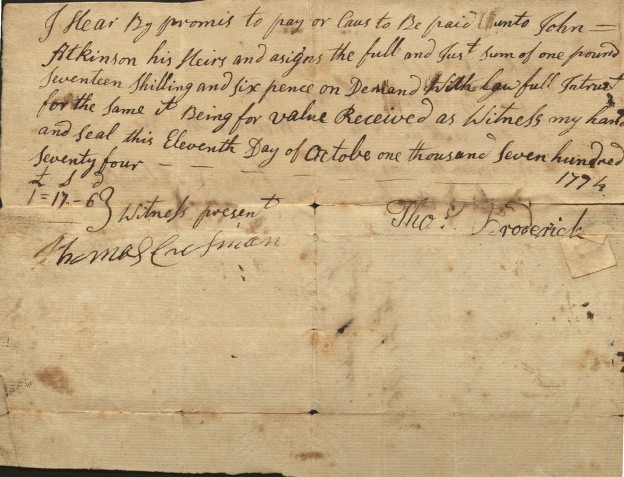
Promissory Note
A promissory note is either a negotiable promissory note that qualifies as a negotiable instrument or a non-negotiable promissory note. For purposes of this article, we will only discuss a negotiable promissory note as that will be the promissory note used by financial institutions. Most of us attribute the term “promissory note” with a negotiable instrument.
Security Instrument
The security instrument is the recorded document that secures the indebtedness stated in the promissory note with a lien on real property. There are two types of security instruments: a deed of trust and a mortgage.
For both a deed of trust and a mortgage, the borrower (or trustor in the case of a deed of trust) transfers legal title to either the lender or a trustee (in the case of a deed of trust) and retains equitable ownership of the fee interest. A deed of trust has three parties, the trustor (borrower), a trustee and the beneficiary (the lender) and a mortgage simply has the borrower and lender.
Legal Opinion
The key legal difference is a deed of trust contains a statutory power of sale so that the trustee may liquidate or foreclose on the collateral to satisfy the indebtedness owed by the borrower/trustor. As I am sure you are aware, Kansas is a mortgage state and Missouri is a deed of trust state.
It may not seem obvious, but the legal opinion issued by borrower’s counsel is a “standard loan document” in my opinion and is a document that some counsel are uncomfortable giving. The best resource on legal opinions is found at The Legal Opinion Resource Center found athttp://apps.americanbar.org/buslaw/tribar/. It is absolutely critical that you use this resource in your legal opinion practice.
For purposes of this article, I have used (and use in my practice) the Inclusive Real Estate Secured Transaction Opinion issued by the ABA/ACREL Committee. This form legal opinion can be found here athttp://apps.americanbar.org/dch/committee.cfm?com=RP213000. You will find both PDF and Word versions at that website.
Security Agreement
A security agreement is the written document that creates a security interest in property that is not real estate. A security interest in real estate is created with a security instrument (deed of trust or mortgage). A “security interest” is a right by a creditor to have a specific item or items of property sold to satisfy the debt owed to the secured party. In order to enforce a security interest against other creditors and in bankruptcy, the security interest must be properly created and perfected.
A lender wants the ability to enforce its security interest and it wants priority over other lenders. As a result, a lender (the UCC uses the term creditor) needs to meet the requirements of enforcement against the debtor and must perfect its security interest so as to preserve it against third parties.
Assignment of Rents
Which leads us to the discussion of the Assignment of Leases and Rents. For income producing properties, this document purports to create a present assignment of the income from the real property (the leases and rents) to the lender. Typically, the lender will then grant the borrower a license to use the leases and rents until or unless an event of default exists.
Guaranty
A guaranty is an agreement made by a third party, to pay and/or perform the obligations of a debtor for the satisfaction of a debt owed to a creditor upon the occurrence of an event, typically a default by the debtor, under the original loan agreement. The Statute of Frauds requires that a guaranty be in writing, signed by the guarantor(s) and delivered to the creditor.
In the context of a loan transaction, a guaranty serves as a form of collateral to support the debt obligation between the debtor and the creditor. But, the guaranty and the loan agreement evidence separate obligations, and their independence is not affected by the fact that both agreements are written on the same instrument or are contemporaneously executed.
The guaranty cannot exist without a primary debt obligation. Thus, if the primary debt obligation has been fully satisfied, is void or is illegal, a guaranty of the debt obligation can also be deemed unenforceable.
Authority
A resolution is the method by which entities officially act and grant authority to individuals to act on behalf of the entity. Lender’s require both the organizational documents for the borrower and evidence of the authority of the person signing the loan documents. In short, a lender wants to make sure that the entity has authorized the loan and that the person signing on behalf of the entity has the authorization to bind the borrower.
 Venture